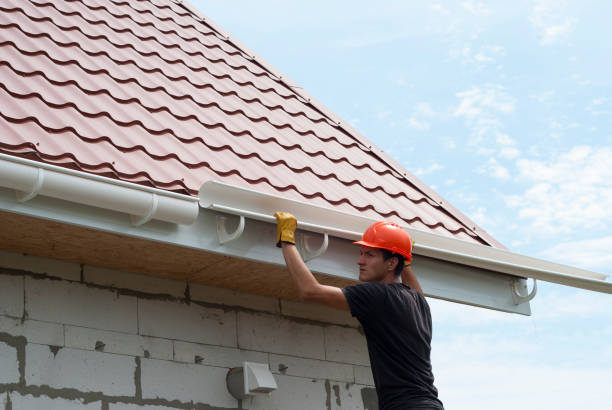
Bigger gutters are not automatically better for every house, but certain roofs place more demand than a standard system can handle. Homeowners comparing gutter companies near me may hear 6-inch gutters recommended when roof size, slope, rainfall, or runoff increases the water reaching the eaves. Understanding why that recommendation is made helps separate a useful upgrade from an unnecessary one.
Large Roof Sections Can Push Standard Gutters Past Their Limit
Broad roof planes collect more rainwater and send a larger volume toward the same gutter run. Contractors measure the square footage draining to each eave rather than judging the home by total size alone. Wider 6-inch gutters provide more room for surges, helping keep water from climbing over the front edge during strong storms. Proper gutter installation also pairs that capacity with outlets and downspouts that release water fast enough to prevent backup. Roofs with slopes, large additions, or wide rear sections often deserve a closer capacity check before a smaller profile is selected.
Steep Roofs Can Deliver Water Faster Than Expected
Pitch changes the speed at which runoff reaches the edge. Steeper surfaces shed water quickly, so a gutter may receive a heavy rush instead of a slower flow. Faster arrival can overwhelm a narrow channel even if the roof area seems ordinary on paper. Experienced installers account for slope when sizing the system because water speed matters alongside total volume.
Homes with several steep sections may direct runoff toward one or two sides of the structure. Valleys, dormers, and intersecting roof lines can make those areas work harder than the rest. One gutter company may recommend 6-inch gutters on selected runs rather than around the entire home, where concentrated flow creates repeated overflow.
Heavy Local Rainfall Can Justify More Gutter Capacity
Storm intensity matters because gutters must manage water at the rate it arrives. Short downpours can fill a shallow system quickly, particularly where roof runoff reaches the eave within minutes. Six-inch gutters offer more holding capacity and provide a larger margin during sudden rainfall. Effective rain gutter installation should consider peak storm flow instead of relying only on mild-weather performance. Regions that see heavy rain may benefit from the extra room even if existing gutters handle normal showers.
Roof Valleys Create High-Volume Drainage Points
Roof valleys combine water from two adjoining slopes and funnel it toward a narrow section of gutter. Concentrated runoff can strike the channel with enough force to splash over the edge or fill that section before the nearest downspout drains it. Larger gutters can capture more of that water and give the outlet additional time to move it away.
Placement still matters as much as size. Moving a downspout closer to a valley, increasing the outlet opening, or adding a splash guard may improve performance along with the wider gutter. Skilled gutter companies near me should inspect the drainage path before recommending an upgrade, since a 6-inch channel cannot fix a poorly placed outlet or blocked downspout by itself.
Long Gutter Runs Often Need More Room for Moving Water
Length affects how much runoff builds inside the channel before reaching a discharge point. Water entering along a long roof edge keeps adding to the stream as it travels toward the outlet. Extra width can carry that growing volume more comfortably, especially where another downspout would interfere with windows, walkways, or exterior design. Good gutter installation also uses the right pitch so water keeps moving without creating a visibly sloped line across the fascia. Extended runs with few outlets are one situation where a 6-inch profile can make a difference.
Larger Downspouts Work Better With Larger Gutters
Capacity gains can be lost if a wide gutter still drains through a small outlet and narrow pipe. Three-by-four downspouts are often paired with 6-inch systems because they move more water than common 2×3 pipes and provide a wider path for leaves and small debris. Matching the parts keeps one component from becoming a bottleneck during a hard storm.
Elbows, adapters, and underground drains need enough capacity for the added flow. Tight bends or small connections can slow water after it leaves the gutter, causing backup near the outlet. Reliable rain gutter installation considers the channel, outlet, downspout, and final discharge as one connected system rather than separate parts.
Repeated Overflow Is a Sign the Existing System May Be Undersized
Overflow that returns in the same locations after cleaning deserves more than another maintenance visit. Persistent spilling can point to gutters that are too small for the roof area, storm intensity, or runoff pattern, although pitch and clogged outlets should still be checked. Evidence may include washed-out landscaping, dark streaks on siding, soil erosion below the eaves, or water pouring over valleys during heavy rain. Apollo Roofing can help homeowners choose a gutter size based on the roof’s square footage, pitch, valleys, downspout capacity, and the amount of runoff different sections receive. Their team can recommend standard or larger gutter profiles where added capacity makes sense, then plan the installation so outlets and downspouts match those drainage needs. This gives homeowners a system sized for the property instead of relying on a one-size-fits-all setup.