Maintaining a home involves managing a delicate ecosystem of mechanical parts, structural materials, and environmental variables. While homeowners readily invest in visible upgrades like new flooring, modern kitchen countertops, or energy-efficient appliances, the most critical infrastructure for daily comfort remains hidden entirely from view. Concealed within your walls, attics, and crawl spaces is a complex matrix of supply trunks and return pathways that act as the circulatory system of your household. This network is responsible for moving thousands of cubic feet of air every single day, regulating temperature, and balancing humidity. When this system is optimized, it works silently to keep your family healthy and your utility bills low, but when it is neglected, it can quietly become a primary driver of mechanical failure and environmental discomfort.
For property owners, landlords, and facility managers, understanding the long-term care of a home’s ventilation network is essential for protecting both personal health and financial investments. A heating, ventilation, and air conditioning system represents one of the largest capital expenses in any residential property. Preserving that investment requires a shift from reactive troubleshooting to proactive, scheduled maintenance. By understanding how dust accumulates, how structural leaks develop, and how modern professional remediation techniques restore factory-level efficiency to your system, you can ensure your living environment remains a clean, affordable, and energy-efficient sanctuary for decades to come.
The Compounding Burden of Indoor Particulate Accumulation
It is incredibly easy to adopt an out of sight, out of mind mentality regarding your air ducts. Because the accumulation of dust occurs incrementally over several years, the gradual decline in indoor air quality and system performance often goes unnoticed until a major problem arises.
How Micro-Debris Saturates Your Airway
Every hour your central climate system cycles on, it draws in the ambient air from your living rooms to heat or cool it. Along with that air comes a microscopic slurry of household debris, including pet dander, sloughed human skin cells, clothing lint, outdoor pollen tracked in on shoes, and fine soil particles. While a standard pleated furnace filter catches a fair percentage of coarse lint, millions of microscopic particles slip through the filter fibers easily. Over years of continuous operation, these fine particles gather along the static-heavy metallic or flexible interior walls of your trunk lines, creating a thick, felt-like lining that continuously sheds debris back into your breathing space.
The Intersection of Moisture and Biological Growth
Indoor spaces naturally experience fluctuations in humidity from cooking, showering, and seasonal weather patterns. When warm, humid air moves through a cool air duct running through an unconditioned attic or a damp crawl space, moisture naturally condenses along the internal surfaces of the pipe. This combination of moisture and organic dust creates an ideal breeding ground for microscopic biological contaminants, such as mold spores, fungal colonies, and bacteria. As the central blower fan engages, it shears these spores from their hidden colonies, distributing them throughout bedrooms and living areas where they can trigger mysterious sinus irritation, dry coughs, and chronic allergy symptoms.
Static Pressure and the Invisible Financial Penalty
A dirty ventilation network does not simply compromise the purity of the air you breathe; it also introduces physical resistance that actively penalizes your household finances by reducing mechanical efficiency.
The Physics of Airflow Resistance
An HVAC system is precisely engineered to push air against a specific level of internal resistance, known in the industry as static pressure. For a blower fan to operate within its optimal efficiency window, the internal pathways of your supply and return lines must remain smooth, clear, and unrestrictive. A heavy accumulation of caked-on dust creates immense micro-friction along the edges of the air stream, slowing down its forward velocity. To overcome this resistance and meet the demands of your thermostat, the blower motor is forced to draw significantly more electrical current, causing a direct, noticeable spike in your monthly utility statements.
Accelerated Mechanical Wear and Component Failure
When a home’s distribution network suffers from high static pressure and restricted flow, the primary mechanical units operate under continuous, unnatural stress. An air conditioning evaporator coil can rapidly drop below freezing due to inadequate airflow, turning into a solid block of ice that completely suffocates the system, while a furnace heat exchanger can overheat and crack. This chronic operational strain drastically shortens the lifespan of your expensive compressor units, fan motors, and electrical relays, leading to frequent emergency repair costs and forcing you to replace major appliances years ahead of their expected schedule.
Identifying the Warning Signs of Ventilation Distress
Because your ventilation network is hidden behind drywall, identifying performance degradation requires paying close attention to specific behavioral clues exhibited by your home’s climate system.
Hyper-Accumulation of Surface Dust and Stubborn Odors
A primary sign of a saturated ventilation network is a home that requires constant, repetitive dusting. If your tables, electronics, and shelving units collect a visible layer of gray particulate matter within forty-eight hours of a deep house cleaning, your ducts have likely passed their holding capacity. Furthermore, if the air exiting your supply registers carries a stale, musty, or faintly smoky odor whenever the climate cycles engage, it points directly to an embedded source of contamination or moisture intrusion within the main junction boxes.
Unbalanced Temperatures and Weak Supply Velocity
Take a careful walk through your property while your system is actively conditioning the air and check the output at each individual wall or floor register. If certain rooms receive a powerful, crisp blast of air while other rooms experience a weak, lukewarm drift, your airflow network is fundamentally unbalanced. This symptom usually points to a physical breakdown within the infrastructure, such as a collapsed section of flexible ducting, a loose connection at a main branch, or an internal blockage that forces your system to run extended, wasteful cycles to bring the furthest rooms up to par.
The Professional Standard of System Restoration
True remediation of a home’s air distribution infrastructure requires specialized industrial equipment and rigorous technical execution, far exceeding what a basic utility vacuum or a superficial sweep can achieve.
High-Velocity Negative Air Extraction
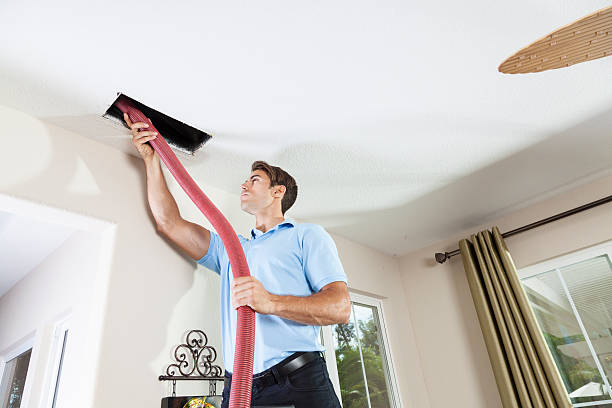
A professional restoration process begins by isolating the entire ventilation network and placing the main trunk lines under an immense negative-pressure environment using specialized, truck-mounted extraction equipment. This massive vacuum prevents dislodged dust from spilling out into your living room during the cleaning process. Once the system is under negative pressure, technicians run high-speed agitating whips, pneumatic brushes, and specialized skipping nozzles through every individual branch line. This process aggressively shatters caked-on dust and heavy scale, allowing the negative air pressure to vacuum the debris out of the home’s envelope entirely.
Verification of Seals and Microbial Protection
Following the mechanical evacuation of all physical debris, the entire network must be inspected for structural integrity and air leaks. Loose joints, degraded seams, and micro-tears are sealed from the outside using commercial-grade mastic compounds and heavy-duty foil backings, locking your conditioned air inside the system where it belongs. Finally, the application of EPA-approved botanical sanitizers treats the clean metal surfaces, neutralizing residual mold spores and ensuring that your air remains pristine. When you want to ensure your home remains optimized for maximum energy savings, clean airflow, and true environmental health, it is essential to build a relationship with certified experts who understand your system inside and out. To protect your investment and receive ongoing seasonal updates for your home’s wellness, remember toStay in touch with us at Ducts All Done, where our elite level of workmanship keeps your air clean, safe, and efficient year after year.