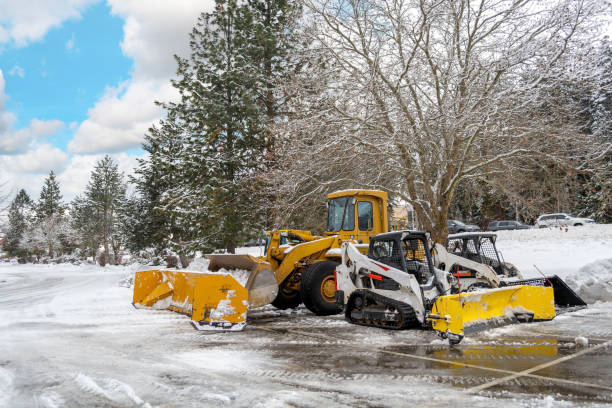
A commercial snow removal plan should do more than promise that a parking lot will be plowed. It should identify the surfaces being serviced, the conditions that activate work, priority areas, communication methods and how ice and extended storms will be managed.
For Stoney Creek businesses, a clear plan supports safer access and more reliable operations. It also helps the property manager and contractor understand their respective responsibilities before winter conditions become urgent.
Property and Surface Inventory
List every area included in the service: parking spaces, drive lanes, fire routes, loading docks, sidewalks, ramps, stairs and entrances. Identify surfaces that are excluded or require separate approval.
Note pavers, decorative concrete, speed bumps, drainage structures and fragile landscaping. Equipment and techniques may need to vary across the property.
Site Map and Snow-Storage Plan
A map helps crews understand property boundaries, priority routes, obstacles and approved snow-pile locations. It is especially useful during overnight work and heavy snowfall.
Storage areas should preserve sightlines, parking access, hydrants, signs and drainage. Plan how piles will be relocated or hauled away if available space becomes limited.
Service Triggers
The agreement should define what initiates plowing, sidewalk clearing and de-icing. Some services may begin at a stated accumulation; others respond to freezing rain, refreezing or a request from an authorized contact.
Clarify whether service continues during a storm or begins after accumulation ends. Long events may require repeated passes.
Priority and Response Planning
Critical routes should be identified in order. Emergency access, accessible entrances and heavily used pedestrian areas typically receive high priority.
Align service with business hours, deliveries and shift changes. A property that opens early may require a different route plan than an overnight industrial site.
Parking-Lot Plowing
The plan should specify drive lanes, parking rows and areas where parked vehicles may limit access. Property managers may need to communicate temporary parking rules.
Plowing should direct snow toward approved storage areas without blocking exits or creating piles that melt across travel routes.
Sidewalk and Entrance Service
Pedestrian areas often require smaller equipment and hand work. Specify ramps, stairs, door thresholds, transit stops and paths between parking and entrances.
Clearing width and timing should reflect expected use and accessibility needs.
Ice Management
Include how freezing rain, compacted snow and refreezing are monitored. Identify the de-icing materials that may be used and any surface or landscaping limitations.
Treatment should be matched to actual conditions. The plan should address return inspections when meltwater or falling temperatures can create new hazards.
Weather Monitoring
Ask how the contractor monitors forecasts and local conditions. Stoney Creek weather can vary across short distances, so site observations remain important.
The property contact should have a simple process for reporting unexpected conditions without creating conflicting instructions.
Communication Protocol
List authorized contacts, backup contacts and preferred notification methods. Define what updates are provided before, during and after significant events.
Communicate special events, construction changes, blocked areas and equipment left outdoors.
Equipment and Staffing
The contractor should select equipment based on property size, access and surfaces. Ask how service continuity is supported during equipment failure or back-to-back storms.
A credible plan recognizes that severe events can affect travel and service timing across the entire region.
Service Records and Inspections
The contractor may provide time, work and material records. Property managers should also inspect the site according to their own procedures because conditions change after service.
Retain documentation in accordance with the organization’s risk-management requirements.
Scope, Pricing and Additional Work
The agreement should explain pricing, seasonal or per-event structure, included services and charges for hauling, extraordinary accumulation or extra visits.
Clarify how additional work is authorized. This reduces confusion during demanding weather.
Match the Plan to the Property and Searcher’s Goal
Someone researching a commercial snow removal service plan is usually trying to make a practical decision, not simply learn a definition. Start by clarifying the outcome: define how the property will be cleared, monitored and communicated about. That goal should guide the recommended scope, materials or service level instead of forcing the property into a standard package.
A site-specific review should consider surfaces, schedules, accessible routes, snow storage, drainage and deliveries. These conditions affect performance, cost and future problems. Photographs and general pricing can help with early planning, but they cannot replace an assessment of the actual property and how it is used.
How to Compare Quotes and Service Proposals
Ask each provider to describe triggers, priorities, plowing, sidewalks, de-icing, inspections and records. A useful proposal makes responsibilities visible so owners compare the same work rather than totals built from different assumptions. It should also explain how unexpected conditions or requested changes will be approved.
Price matters, but long-term value also depends on planning, suitable materials or equipment, workmanship and communication. A lower figure can become more expensive when important tasks are excluded or the plan does not fit the site.
Questions to Resolve Before Work Begins
Confirm priorities, access requirements, the decision-maker and communication method before the start date. Ask what the owner must provide, what can affect scheduling and how concerns will be documented. Clear answers reduce uncertainty for the contractor, occupants and neighbours.
Keep the approved scope, estimates, product information and service records together. Good documentation makes it easier to review completed work, maintain the finished system and address future repairs, changes or weather-related needs.
Common Planning Mistakes to Avoid
One common mistake is using a one-line agreement that omits priorities, repeat visits and ice management. Another is waiting until the project or season becomes urgent, reducing the time available to compare options and correct unclear details. Good planning considers the complete operating life of the solution, not only installation or the first visit.
Owners should not assume every property requires the same approach. A strong recommendation connects proposed work to observed conditions and explains why the solution is appropriate. That explanation helps distinguish a site-specific plan from a generic quote.
How to Prepare for an Efficient Project or Service Start
Before work begins, remove movable obstacles where requested, identify access limitations and tell the provider about known underground features, private services, sensitive surfaces or operational restrictions. Confirm how pets, tenants, customers, deliveries and neighbouring areas will be managed.
Review the final plan on site when practical. A short pre-start conversation can confirm layout, priorities, staging, storage and protection details that are difficult to understand from a written estimate alone. It also gives both parties a shared reference for the finished result.
After completion or each major service period, review the property and document concerns promptly. Ask for maintenance, inspection or follow-up guidance that applies to the chosen solution. Proactive review helps owners protect the investment and identify small issues before they become larger, more disruptive problems.