TLDR: Chinese open weight models like DeepSeek, Qwen and Kimi now power a significant share of the AI tools businesses and creators use daily, often without anyone realizing it. Understanding this shift helps creators make smarter decisions about which agentic tools actually deliver value without unnecessary cost.
The Quiet Shift Behind Your Favorite AI Tools
A year ago, most AI powered products ran on models from a small handful of well known American labs. That has changed faster than most casual users have noticed, with Chinese open weight models now powering a meaningful share of the tools people use every day, from coding assistants to the agentic tools creators rely on for engagement and content.
This shift matters because open weight models change the underlying economics of building AI products. Rather than paying premium per token rates to a closed provider, companies can build on a publicly available foundation and layer their own training on top. Understanding AI cost structure in this new landscape means recognizing that the model powering a tool matters just as much as the tool’s advertised features.
Who the Major Chinese Model Families Actually Are
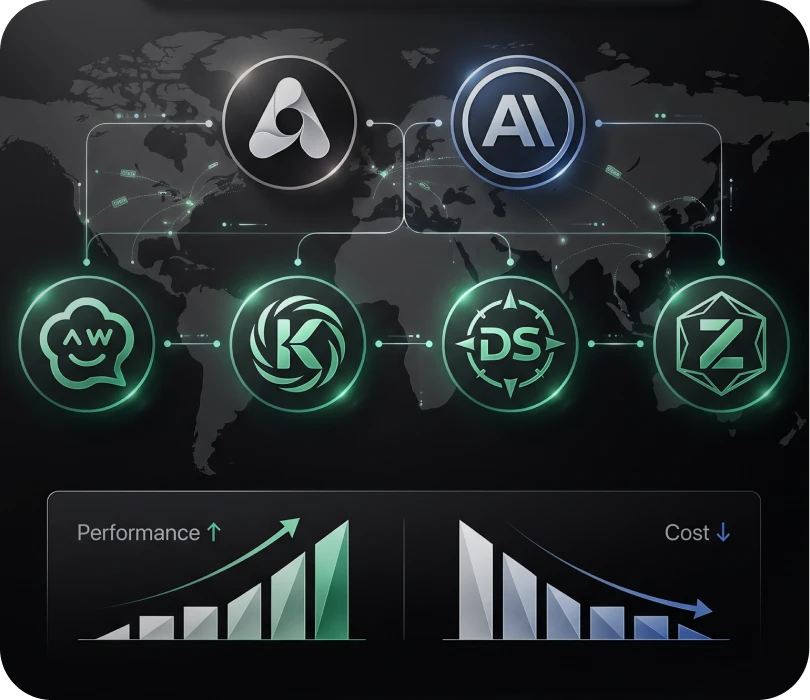
Several distinct labs now compete across different strengths, rather than one company dominating the field the way headlines suggested a year or two ago. Each has carved out a different niche worth understanding if you are evaluating the tools built on top of them.
This diversity matters because it means the “best” underlying model genuinely depends on the specific task a tool is trying to accomplish, not a single universal leaderboard ranking.
Why This Shift Happened So Quickly
The rapid rise of Chinese open weight models comes down to a combination of permissive licensing, aggressive pricing and genuinely competitive performance on the benchmarks that matter most for production use, particularly coding and agentic tasks. Several major labs now ship models under licenses that allow commercial use, modification and deployment without the restrictive terms once common in the industry.
Data on model usage across major developer platforms shows just how significant this shift has become, with Chinese providers now accounting for a large and rapidly growing share of total token volume on some of the most widely used AI infrastructure platforms, a dramatic jump from a small fraction of usage just a year earlier.
What has driven adoption specifically:
- Permissive open licenses allowing commercial deployment without heavy restrictions
- Pricing that undercuts comparable proprietary models significantly, sometimes by a wide margin
- Strong performance specifically on coding and long context agentic tasks
- Growing developer familiarity and tooling built around these open weight foundations
What This Means for Agentic AI Cost Specifically
Agentic tools, the kind that take multiple actions per interaction rather than generating a single response, are particularly sensitive to underlying model cost, since their compute usage multiplies with every additional reasoning step involved. This is exactly where open weight models have made the biggest practical difference for companies building creator focused tools.
Looking at Chinese AI models enterprise adoption data shows companies increasingly choosing these open foundations specifically for cost sensitive, high volume use cases, while reserving premium proprietary models for more specialized, lower volume tasks. This tiered approach, using efficient open models for routine work and reserving expensive frontier models for genuinely complex reasoning, is quickly becoming the standard architecture for agentic products built with cost efficiency in mind.
Does the Origin of a Model Actually Matter to Creators?
For most creators using an agentic tool day to day, the specific model powering it matters far less than whether the tool performs well and stays affordable as usage scales. What matters practically is not nationality of origin but genuine performance, cost efficiency and how transparently a provider explains what powers their product.
Considerations that genuinely matter more than model origin:
- Does the tool perform the specific task well, regardless of what powers it underneath?
- Is pricing transparent and does it scale predictably as usage grows?
- Does the provider disclose what model architecture they use, rather than hiding it?
- Is there a track record of reliable performance for the specific use case you need?
Providers who build thoughtfully on efficient open weight foundations, regardless of where that foundation originated, often deliver better value than those relying entirely on the most expensive proprietary option available by default.
Practical Questions to Ask Any AI Tool Provider
Given how much the underlying model landscape has diversified, creators evaluating agentic tools benefit from asking direct questions rather than assuming a familiar brand name automatically means better value or performance.
Questions worth asking before adopting a new tool:
- What model architecture powers this tool, and is it open weight, proprietary, or a hybrid combination?
- How does that choice affect the pricing I can expect at higher usage volumes?
- Has the provider been transparent about this from the start, or did it require asking directly?
- What real world evidence exists that this architecture performs well for my specific use case?
Providers with nothing to hide on these questions tend to answer directly and specifically, while vague or evasive responses are often a signal the pricing structure has not been designed with genuine transparency in mind.
How This Shapes Echo-Me’s Approach to Building Tools
The broader shift toward efficient, well built open weight foundations directly informs how Echo-Me approaches its own agentic tools for creators. Rather than defaulting to the most expensive available model for every task, a thoughtful approach means matching model architecture to the specific job at hand, drawing on the same efficiency principles that have made open weight models increasingly competitive across the industry.
This matters for creators specifically because it means the tools handling routine, high volume interactions like comments and DMs can run on cost efficient architecture without sacrificing quality, keeping pricing predictable even as a creator’s audience and engagement grow substantially over time.
Frequently Asked Questions
Are Chinese AI models less safe or reliable than other options?
Reliability depends on the specific model and how it has been implemented, not its country of origin. Evaluating actual performance and transparency matters more than assumptions based on where a model was developed.
Why have Chinese open weight models grown so quickly in adoption?
A combination of permissive commercial licensing, aggressive and often lower pricing, and genuinely strong performance on coding and agentic benchmarks has driven rapid adoption across the industry.
Does using an open weight model mean a tool is lower quality?
No, when properly fine tuned, open weight models can perform competitively with proprietary alternatives while offering meaningfully better cost efficiency at scale.
Should creators care which specific model powers their AI tools?
Understanding the general architecture helps evaluate pricing and performance expectations, though the tool’s actual output quality and reliability for your specific use case matter more than the brand behind it.
Is it common for companies to build agentic products on open weight foundations?
Yes, this has become an increasingly standard approach, particularly for cost sensitive, high volume use cases where efficient open weight models offer strong value.
How does Echo-Me decide which model architecture to use for its tools?
Echo-Me matches model architecture to the specific task at hand, using cost efficient foundations for high volume interactions while reserving more resource intensive approaches for tasks that genuinely require them.
Final Thoughts
The rise of Chinese open weight models has quietly reshaped how AI products get built, often without the average user realizing it. For creators, this shift matters less as a geopolitical talking point and more as a practical signal that cost efficient, well built tools are increasingly available across the entire industry, not just from a handful of premium providers.
Echo-Me has embraced this same principle in building its agentic tools, choosing architecture based on genuine efficiency and performance rather than defaulting to the most expensive option by habit. As the model landscape continues diversifying, understanding what actually powers your tools, and asking the right questions about it, remains one of the smartest habits any creator can build.