Creative teams resist time tracking for the same reasons they resist most administrative systems — it feels like it was designed for someone else’s work. And in most cases, it was. Generic tools built for sales teams or software developers don’t account for the rhythm of creative work: long thinking sessions that produce nothing visible, rapid production bursts, client feedback rounds that reset progress, and the constant context-switching between multiple active projects.
A creative team time tracking system that works needs to be fast to use, flexible enough to match creative workflows, and structured enough to produce reports that are actually useful for project management and billing.
Why Creative Teams Under-Track
The problem isn’t motivation — it’s friction and relevance. When a designer has to navigate three menus to log 20 minutes of work, they skip it. When the time log categories don’t match how creative work is actually organized, the entries are vague and useless. When nobody ever looks at the data or uses it to improve anything, the behavior stops.
Fix all three: make entry fast (timers, keyboard shortcuts, mobile), make categories match real work (concepting, production, revision, client review, delivery), and make the data visible and actionable for the team — not just for finance.
Project Types That Need Different Tracking Approaches
Brand identity projects, UX/UI work, campaign production, and editorial design all have different time profiles. A logo project front-loads exploration time and back-loads revision time. A UI project front-loads research and wireframing and has continuous revision cycles through development. Tracking these with the same category structure produces misleading data. Let project type drive the task taxonomy.
When creative work connects to development sprints, shared time visibility matters even more. Developer time tracking that uses the same project structure as design tracking gives product managers a unified view of where both disciplines stand — without consolidating data manually.
Capacity Planning for Creative Teams
Creative directors constantly face the same question: do we have capacity to take on this project? The answer requires two pieces of information — current project commitments and available staff hours. Without accurate time tracking, current commitments are estimated. Without leave management, available hours are theoretical.
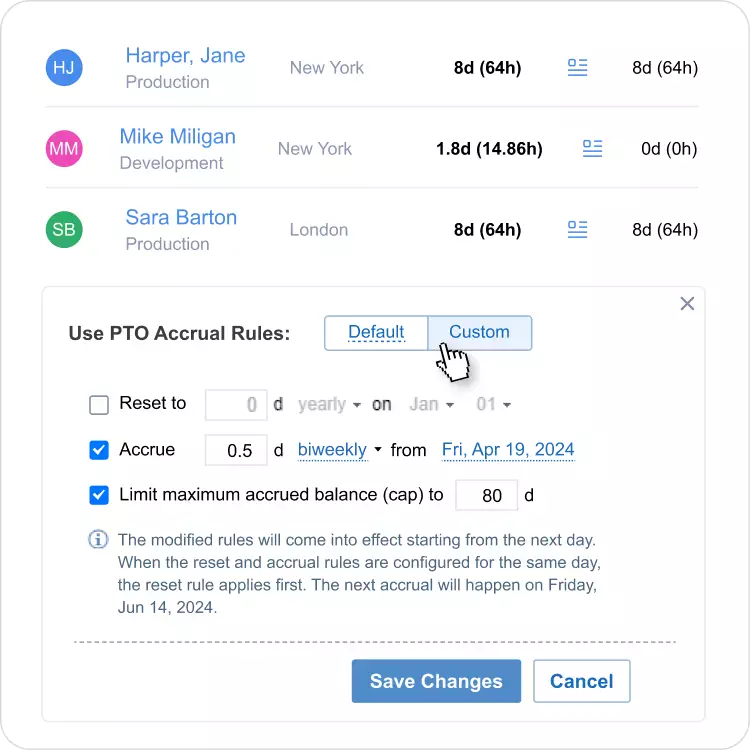
actiPLANS handles the availability side — planned leave, holidays, and part-time schedules visible alongside project workloads — so capacity decisions are grounded in what’s actually possible, not what would be possible if everyone showed up every day.
Reporting That Serves the Creative Business
The reports that matter for creative businesses are: time by client (for billing), time by project phase (for estimation improvement), and time by team member (for utilization and workload balance). A system that produces all three without manual aggregation saves hours every billing cycle and gives creative directors the information they need to run a sustainable practice.