Link building for e-commerce has a structural challenge that doesn’t get talked about enough: the pages that need links most are often the hardest to get them for.
Product pages and category pages – the pages that drive purchase intent and transaction value – are not naturally linkable. Nobody writes a blog post that says “check out this great product listing for running shoes.” The content that attracts links in e-commerce is the editorial content, and that content often sits several clicks away from the pages that actually convert.
The Solution: Topical Authority Transfer Through Internal Linking
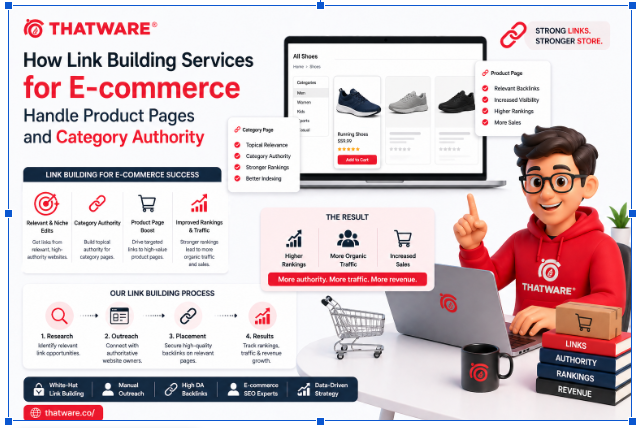
The answer is topical authority transfer through internal linking architecture. When link building services for e-commerce work well, they’re not trying to get direct links to product pages. They’re building authority into content assets that can then pass it to commercial pages through carefully structured internal links.
The process: identify the high-value commercial categories you want to rank. Build genuinely linkable content assets around those topics – buying guides, comparison articles, industry reports, expert Q&As. Earn links to those assets through legitimate outreach, PR, and content partnerships. Then structure internal links from those assets to the relevant category and product pages with appropriate anchor text.
This is link equity flow architecture, and it’s how sophisticated e-commerce SEO teams think about the challenge.
Why Link Assets Must Be Genuinely Worth Linking To
The link assets need to be genuinely worth linking to. This part is often where execution falls short. A “buying guide” that’s just a thinly disguised product listing isn’t going to earn editorial links from quality publications. A buying guide that actually helps someone make a better decision – with real comparative analysis, honest trade-off discussion, and specific situational recommendations – is linkable, especially when it covers a topic that people actually write about.
The editorial bar for link-worthy content is higher than most content teams initially expect. It requires real research, genuine expertise, and the willingness to make specific recommendations rather than hedging everything.
SEO Link Building Services and Outreach for E-commerce
SEO link building services for e-commerce also need to think differently about outreach targets. The publications that link to e-commerce content tend to be review sites, lifestyle publications, niche interest blogs, and specialty media – not general business or tech press. Finding and building relationships with the right targets for a specific product category requires genuine vertical knowledge, not a generic outreach template.
Manufacturer relationships are another underutilized link building channel. Many manufacturers have a “where to buy” page or an authorized retailers section that represents a legitimate, editorially relevant link opportunity. Building and maintaining those relationships can generate link equity that grows with the manufacturer’s own domain authority.
Product Review Programs: Earned Links Done Properly
Product review programs done properly are also worth considering. Real products sent to real reviewers who actually use them and write about them generate the kind of links that are genuinely earned – not manipulated, not paid for in a way that violates guidelines, just the natural result of a product being good enough that someone wants to write about it.
For e-commerce brands with proprietary products, this is one of the highest-return link building investments available. The key word there is “properly” – review programs that incentivize positive coverage or target low-quality sites create risk rather than value.
Why E-commerce Link Building Requires a Longer Time Horizon
Link building for e-commerce at scale requires patience and a longer time horizon than many brands are comfortable with. The authority transfer from editorial content to commercial pages takes time to flow. The relationships that generate ongoing editorial coverage take time to build.
The sustainable path runs through genuinely earned authority, even when it’s slower. That’s how durable rankings get built.